






Non Credits course detail
Linux Fundamentals
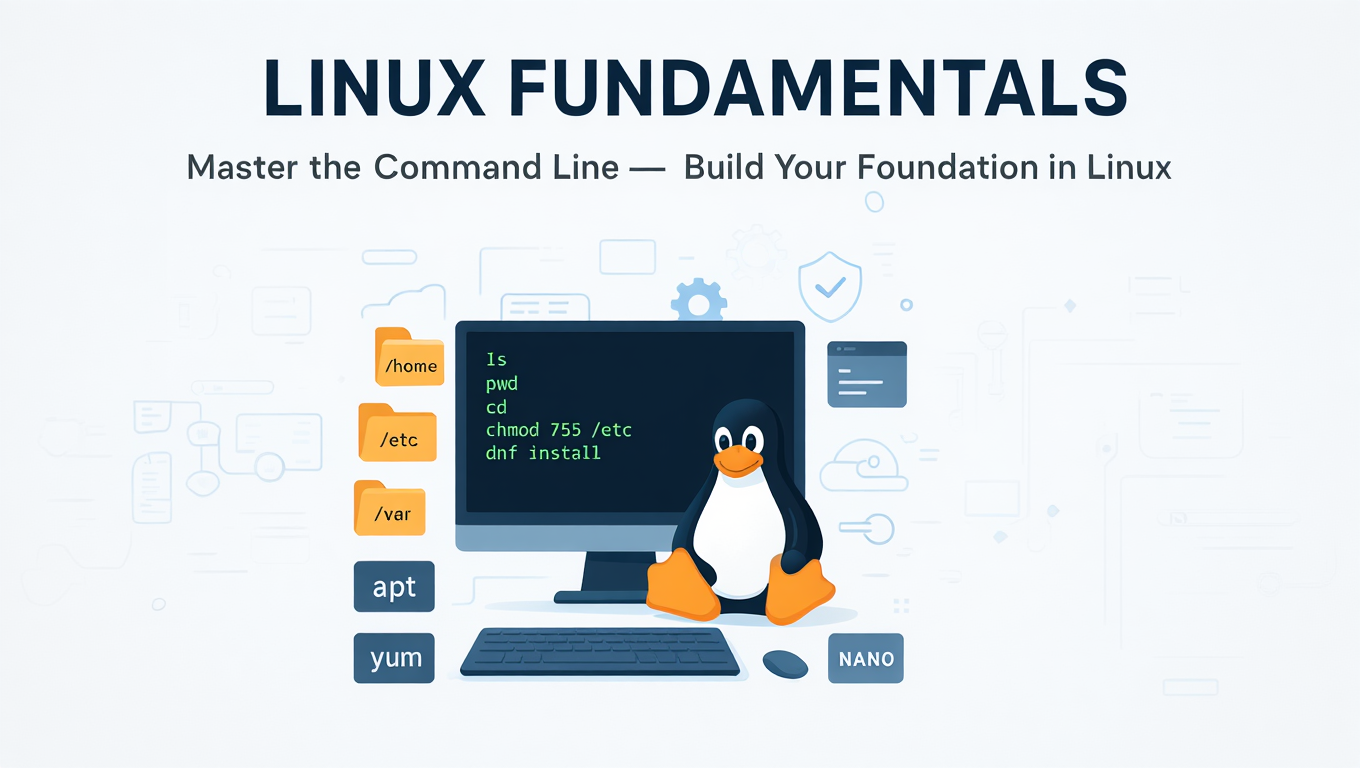
The Linux Fundamentals course is carefully structured to cater to individuals who are completely new to the field, and IT professionals from different sectors seeking to establish a thorough and practical comprehension of the predominant open-source operating system globally. The central aim of this course is to clarify the intricacies of the Linux environment and provide participants with the fundamental command-line competencies necessary for positions in System Administration, Cloud Engineering, DevOps, and Cybersecurity. Enrollees will acquire the confidence to traverse the Linux filesystem, grasp its underlying architecture, and execute essential daily tasks independently of a graphical interface. The course emphasizes the development of a robust foundation by instructing learners on the effective management of files and directories, regulation of user permissions, installation of software packages, and oversight of system processes. Upon completion of this program, participants will not only comprehend the underlying philosophy of Linux but will also possess the practical skills required to engage with servers, resolve basic issues, and establish a solid groundwork for pursuing advanced technical certifications such as RHCSA or cloud credentials centered on Linux.
The structure of the course content is designed as a progressive and practical experience, initiating with an extensive orientation to the laboratory setting to guarantee that you can cultivate skills in a secure, real-world context. The curriculum commences with an introduction to various Linux distributions and then promptly engages you in system access and utilization of the command line interface (CLI). Subsequently, you will engage deeply with fundamental competencies: Chapter 3 emphasizes file management, instructing you on how to control command output, manipulate both text and binary files, and utilize essential text editors such as Vim or Nano. Chapter 4 further elaborates on this topic through an in-depth exploration of the Linux filesystem hierarchy, including directory navigation, batch file manipulation, and storage space management. The following chapters systematically expand upon this foundational knowledge, addressing user account management and the crucial concept of file permissions, which is indispensable for system security. The course additionally provides guidance on acquiring and installing software through package managers such as yum or apt, as well as compressing data for effective storage and transmission. Ultimately, you will apply your acquired skills to the fundamentals of Linux networking, remote file transfer, and process monitoring, culminating in a thorough review lab that challenges you to consolidate all your newly acquired skills, thereby ensuring your preparedness for employment upon course completion.