Follow us :







ACADEMIC PROGRAMS
SAMRIDDHI CLUBS
STUDENT SERVICES
FOLLOW US ON


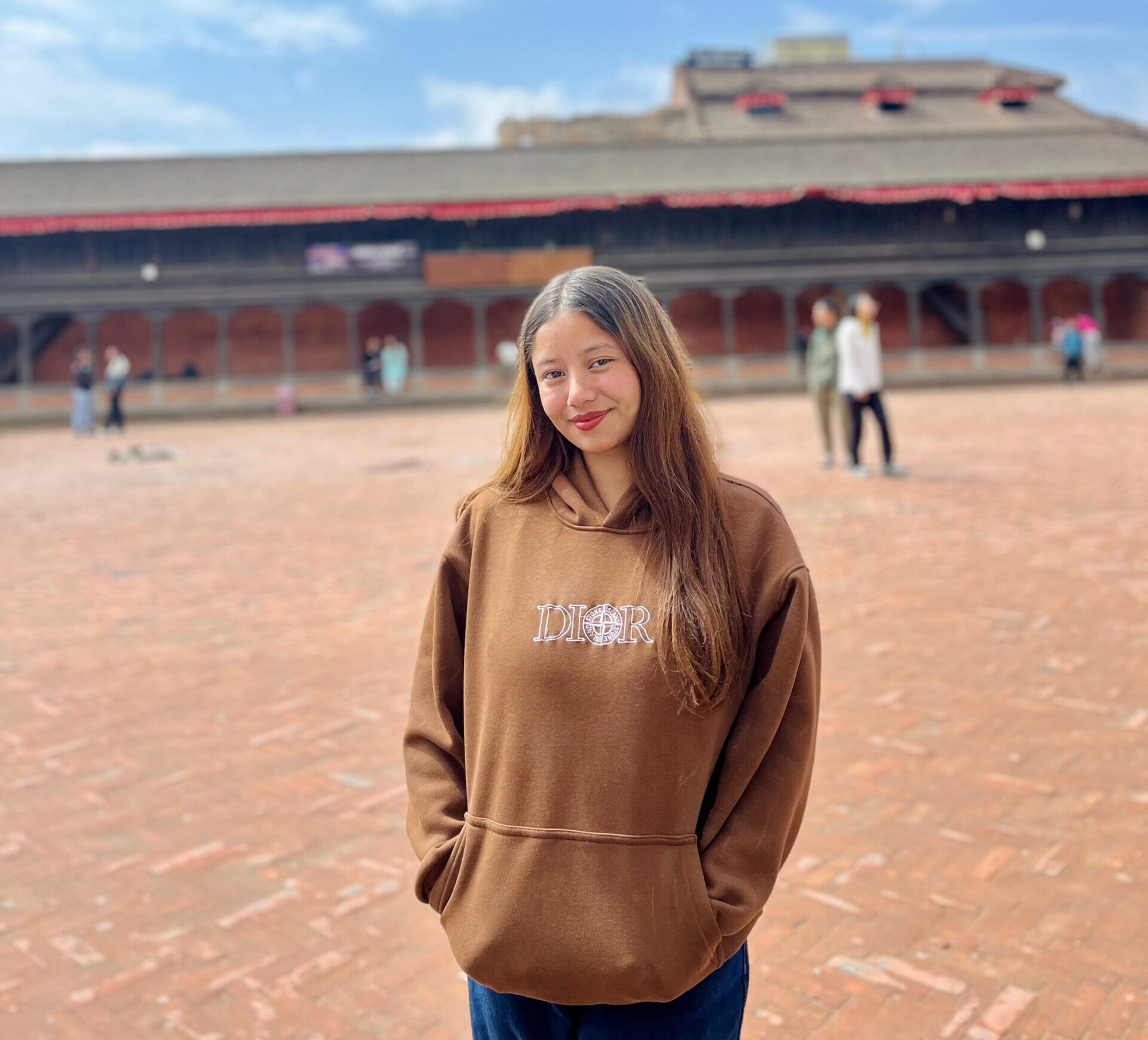
A day of heritage and history: Our w..
A day of heritage and history: Our walk through Bhaktapur

31 Mar, 2026
As a student of Samridhhi College, I had a wonderful opportunity to be a part of heritage walk that deepened my understanding of our culture, history, and identity. We, BSW 1st year Students and BSW 3rd year Students, witnessed the powerful monuments, structures that signifies the beauty of Bhaktapur, which was organized by BSW Department along with Samriddhi Social Club. At the beginning of our heritage walk, our sociology teacher, Sambid Bilas Pant Sir explained how Bhaktapur got its name and its historical background. He further explained that “Siddhapokhari’’ was built during the reign of King Yakshya Malla in the 15th century. We went at Siddhapokhari where our faculty teacher shared a local legend about priest and his wife. According to the story, the priest had the ability to change his form. It is believed that the priest transform himself into a snake and instructed his wife to perform a puja to help him return to his human form. However when his wife saw the priest in the form of a huge snake, she became frightened and ran away instead of completing the puja. Because of this, the priest was never able to return to his human form and is said to have remained in the pond as a snake. His wife was from Thimi that is why even after centuries people of Thimi were afraid to visit the pond. The pond was also a water reservoir for centuries.
Samriddhi College, with BSW, BPsych, B.Sc.CSIT, BCA and BBS courses, effort to expose its students to practical setting was satisfactory for me. I was curious for next stations. After we had an opportunity to explore “Bhajya Pukhu” a traditional pond that holds cultural, historical, and social significance. It is not just a simple water pond; it represents the traditional newar lifestyle and the importance of water resources in ancient urban planning. Then onwards, we went to “Na Pukhu” pond, which was quite interesting as it had a gate like structure and was historically used as a barrier during wars. Next, we visited Bhaktapur Durbar Square, one of the most significance cultural and historical landmarks of Nepal. Here, we observed stone carvings, including a mirror – like carving embedded in stone on the ground, which reflected the artistic excellence of ancient craftsman. We also saw the famous 55-window palace (often referred to as the 55-structured palace) .This structure is known for its unique architecture and beautifully craved wooden windows. From each of the windows of the 55 window palace, the sunset can be seen gradually, as stated by Sambid Sir. We also saw Chyasalin Mandap in between 55 structured palace and Pashupati Temple, which was built to block energies directly coming from the temple. We then visited Nyatapola Temple , which is also known as ‘The Panchtale Mandir ‘ ( 5 storey temple ). The temple is dedicated to Siddhi Lakshmi , a powerful tantric manifestation of goddess Durga. In course of introducing our heritages, he enlightened that the steps (ladder) leading up to the temple are guarded by statues of powerful figures, representing protection and strength.
The first tier represents humans (Jaimal and Patta)
The second tier represents elephants.
The third tier represents lions.
The fourth tier represents griffins.
The fifth tier represents deities or divine power.
In traditional interpretation of a Panchtale, each level is linked with the five elements;
1st floor – Earth (Prithivi)
2nd floor – Water ( Jal)
3rd floor – Fire( Agni)
4th floor – Air ( Vayu )
5th floor – Sky/Heaven (Akash)
The structure symbolizes the hierarchy of strength and spirituality, showing how humans progress from the physical world towards divine consciousness.
We also visited the oldest library of Nepal “Safukotha” located in Bhaktapur Durbar Square. Although the structure appeared quite damaged and worn out, it still held historical importance as a center of knowledge in ancient time. Another important stop was “Dattatreya Temple”. Sambid Sir explained that there was pujari who got married at the age of 70. As he could not have son naturally at that age, he pleased god and asked for a son who is combined form of Brahma, Vishnu, and Shiva. Lord Dattareya is believed to be a combine form of these three god. It is also surrounded by old settlements that reflects the ancient newar lifestyle. We then visited “Taleju Bhawani Temple” one of the most revered temple in Bhaktapur. It is dedicated to goddess Taleju Bhawani, the royal deity of the Malla Kings. In front of the temple, we observed a tree that is oldest as a temple, which adds to the historical and spiritual importance of the site.
Finally, we returned to the museum within Bhaktapur Durbar Square. The museum displayed various artifacts, traditional tools, sculptures, and historical item that reflect the rich cultural heritage of Bhaktapur. It helped us better understand the lifestyle, art, and traditions of ancient Nepalese society. We also saw different ponds inside the museum in which rulers used to hide their wealth. We have to know about how the tradition of living goddess also known as “Kumari” is closely linked with the history of the Malla Kings of the Kathmandu valley, including Bhaktapur Durbar Square. One of the best faculty of our college, Sambid Sir, voiced us that a Malla king used to secretly meet the goddess Taleju at night in human form. They would play a game of dice, and the goddess would bless the King and his Kingdom. Taleju Bhawani made a deal with King and told him not to share anyone about meeting her but unfortunately out of curiosity queen followed king and found him with the goddess, which made the goddess angry. As a result, the goddess Taleju disappeared and declared that she would no longer appear to the king in that form. Instead, she instructed that she would reside in the body of a young virgin girl from the Shakya or Bajracharya community. From that time, the tradition of selecting a Kumari began. The chosen girl is believed to be the living embodiment of the goddess Taleju.
This field visit was a highly enriching experience for me. Observing these heritage sites in person helped me understand the practical aspects of Sociology, especially how culture, religion, architecture and community life are interconnected. Sambid Sir’s explanations made the visit more meaningful by linking each site with its historical and Sociological significance. The visit also made me realize the importance of preserving such sites for future generations, as they are crucial in maintaining cultural identity and continuity. Overall, this historical walk was both informative and inspiring, and it deepened my appreciation for Nepal’s rich cultural heritage. I am grateful to Department of Social Work and Samriddhi Social Club for showering the visible efforts in the first field visit effort that I have participated in. I just became mindful about Samriddhi College as one of the best college of Bhaktapur District with best faculties.
Ritisha Karki
BSW/Bpsych 2082 Batch
Explore Latest News

Active Participation of Samriddhi College Students in SHE QUIZ 2025

13 Aug, 2025
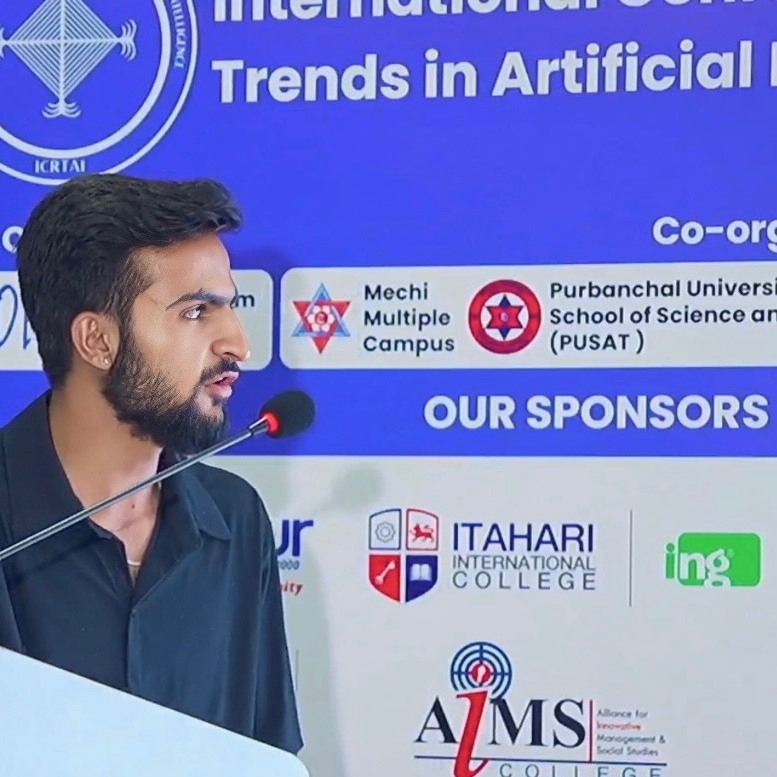
Celebrating Global Recognition: Saugat Kafle Shines at International AI Conference 2025
30 Jul, 2025
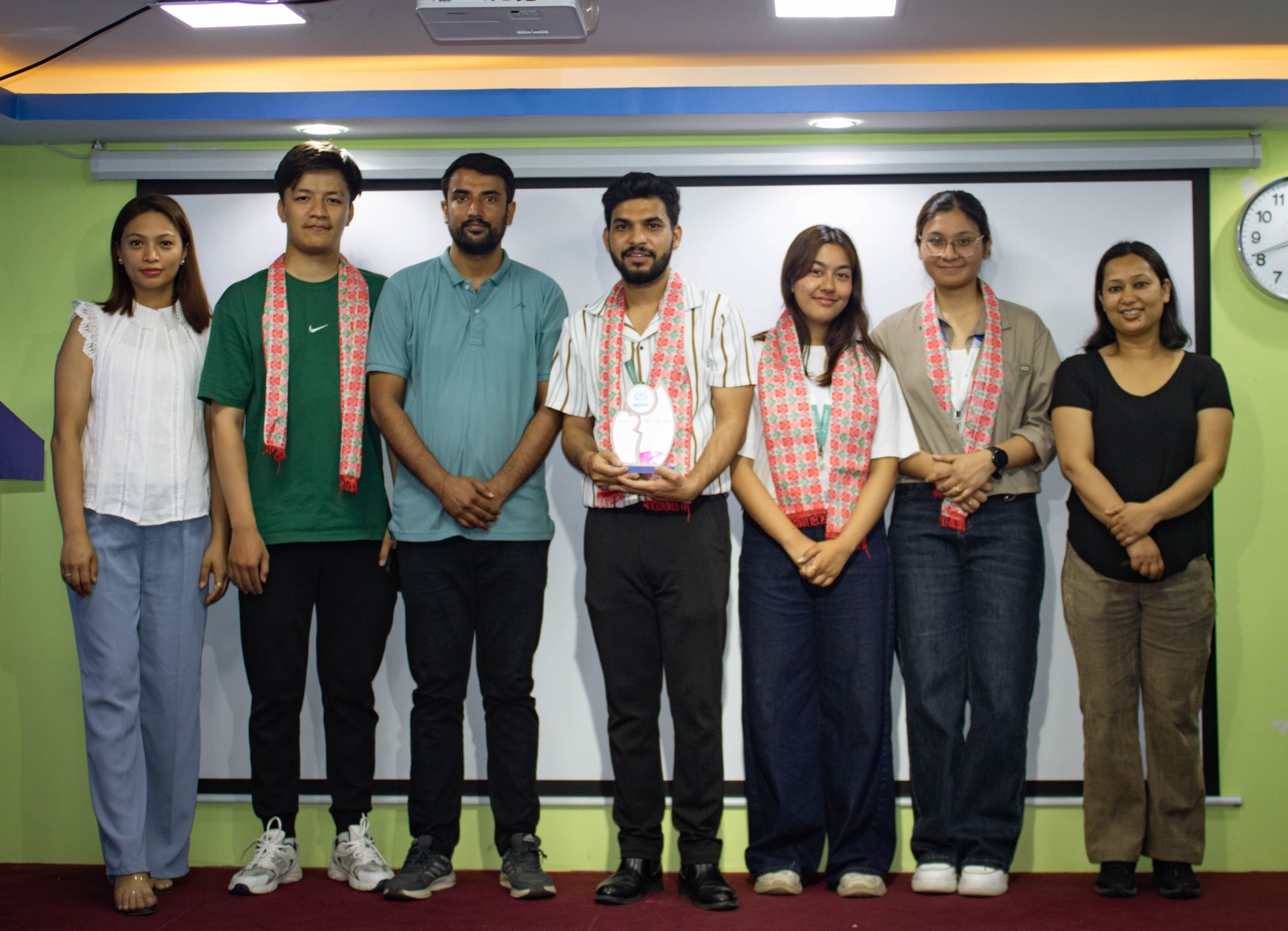
UI/UX Bootcamp 2025: Empowering Design Thinkers at Samriddhi College
27 May, 2025

AI & Inspiration: Mr. Jatin Bhusal Shares Deep Learning Insights with Students
17 Apr, 2025